
Jefferson City Directory Shelves
Historical directories for Jefferson County are strongest in Beaumont, with nearby communities sometimes included in the same volume. The Tyrrell Historical Library is the local starting point. Its Texana and genealogy collections hold directories, census microfilm, newspapers, indexes, and digital routes. The University of Texas Briscoe Center catalog identifies an R.L. Polk and Co. Beaumont run, while Tyrrell preserves the local context needed to read a volume correctly. A directory is a dated snapshot, so record the year, publisher, page, and the repository before treating an entry as evidence.
| Collection | Years represented | Where held | Access route |
|---|---|---|---|
| Beaumont directory volumes | Begins 1903; cataloged dates run from 1903 through 1983 | Tyrrell and UT Briscoe | Library use and catalog research; availability varies by year |
| R.L. Polk Beaumont, Nederland, and Port Neches run | Discrete catalog dates from 1903 to 1983 | UT Briscoe, Tyrrell, and established genealogy holdings | Cataloged print and varying digitized or indexed access |
| Reverse or criss-cross material | Exact separate local run not established | Tyrrell and larger directory collections | Ask for an address or street section, then verify alphabetically |
| Enterprise and Journal newspaper run | Historical run held locally; limited 1904 digitized Enterprise issues noted | Tyrrell and digital newspaper sources | Microfilm, archive, and cardholder database routes |
| Federal census material | 1790 through 1920 at Tyrrell | Tyrrell, Sam Houston Center, NARA, and FamilySearch | Microfilm and research databases; later schedules follow the federal release rule |
Start with the volume nearest the known year. If the question concerns Nederland or Port Neches, do not assume a separate annual book exists. The Polk coverage combines those places with Beaumont, and the reviewed Nederland library guidance says Nederland has no standalone city directory. That local catalog quirk can prevent a false dead end.
Note: Catalog dates establish that a volume exists, not that a full-text scan or every yearly issue is available online.
Jefferson City Directories in the Polk Run
The Briscoe Center's Beaumont directory record names R.L. Polk and Co. and lists Beaumont, Nederland, and Port Neches coverage. Its dated entries include 1903, 1906, 1910, 1920, 1923, 1927, 1929, 1931, 1933, 1935, 1937, 1938, 1940, 1959, 1966, 1968 through 1970, 1972 through 1976, 1978, and 1983. Those dates are useful checkpoints, but they are not a promise of an unbroken annual sequence.
When a desired year is absent, check the nearest earlier and later volumes, then use the Beaumont Enterprise or Journal for a dated move, marriage, death, business, or probate notice. The local library also points researchers to HeritageHub for obituary and death-notice work when card access applies. This is better than guessing that a household appeared in the missing year.
The catalog page captured in the project image shows how to preserve a publisher, place, and date citation for a Jefferson city directory.
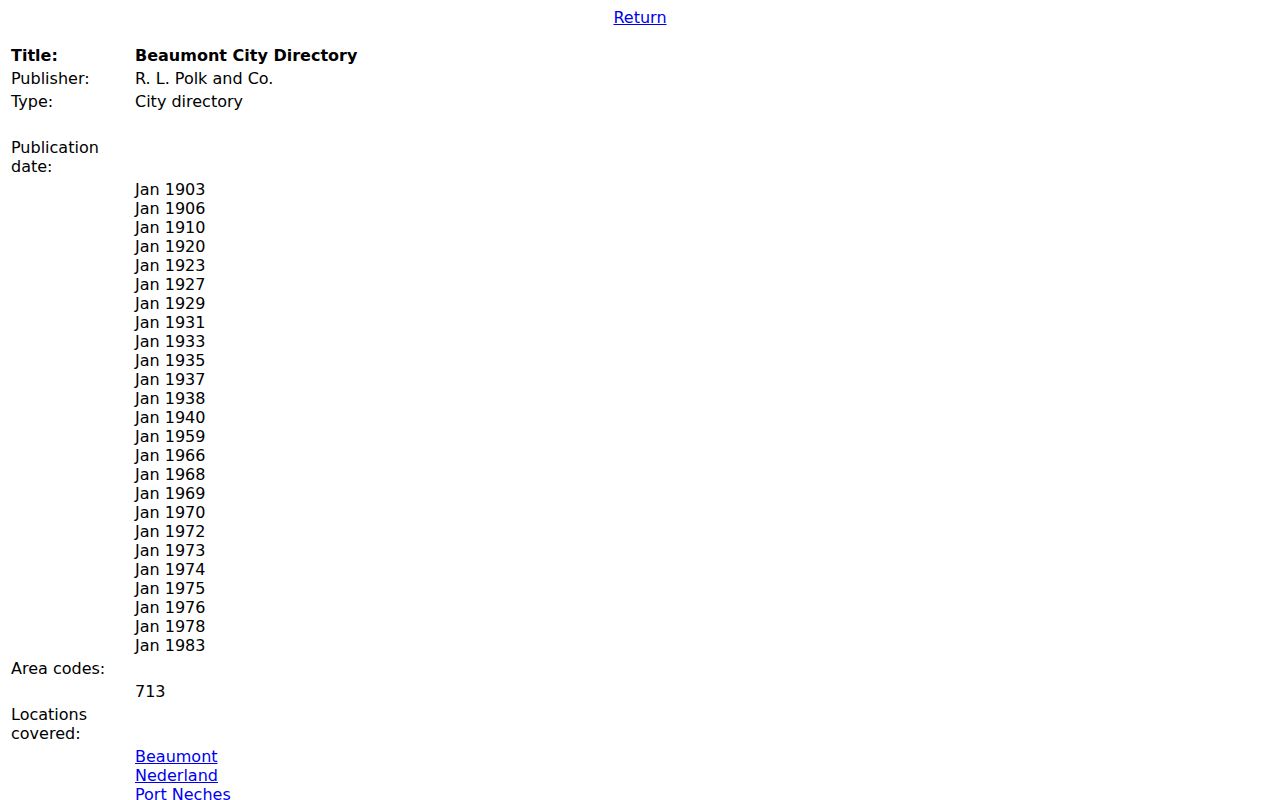
Use the catalog details to request the exact year, rather than assuming a volume contains a particular neighborhood or nearby city.
Jefferson Directory Years After Spindletop
Beaumont's early directory evidence is especially useful because the city changed quickly after the 1901 Spindletop discovery. The Texas Historical Commission reports that the population grew from about 9,000 to 30,000 in a few months. Directories, deeds, newspapers, and tax material from the early twentieth century may therefore show a newcomer or a short-lived address before a property trail becomes clear. Treat each source as a dated observation, not a permanent identity record.
Beaumont directories begin at least in 1903. Pair a volume near 1910 or 1920 with the corresponding census instead of forcing one source to answer every question. The directory can place a named adult at a street and identify a business line or telephone listing when printed. The census can add household members, ages, and relationships. Both need a repository and page or reel citation.
Read a Jefferson City Directory Entry
The reviewed local catalog pages do not expose a searchable Beaumont entry image, so no example line should be invented or expanded from a generic directory. Instead, make an inventory from the volume in hand. Copy punctuation and initials as printed, photograph the abbreviation key, and note whether a name comes from the alphabetical, street, classified, or business section. A city directory entry can guide research, but it does not by itself establish ownership or prove that a person stayed at the address all year.
| Name line | Copy initials, suffixes, punctuation, and any cross-reference exactly as printed. |
|---|---|
| Address line | Record the house number, street, unit detail, and directional wording without modernizing it. |
| Family detail | Preserve a spouse notation only when the local volume displays one. |
| Work or business line | Record a stated work or business reference as a historical detail. |
| Volume evidence | Keep the year, publisher, page, repository, scan or reel identifier, and access date. |
- Criss-cross directory
- An address or street-order section that may point to a listed occupant. Its exact local years should be confirmed with the repository.
- Householder index
- An alphabetical arrangement that helps locate a named household or a cross-reference in the volume.
- Abbreviation key
- The volume's own explanation of shortened terms. Photograph or transcribe it before interpreting an unfamiliar mark.
Jefferson City Directory Help at Tyrrell
Tyrrell is at 695 Pearl Street in Beaumont and lists hours of Monday through Friday, 9 a.m. to 6 p.m., with 409-833-2759 as its phone. Its local-history scope includes Texana, genealogy, archives, microfilm, digitized collections, census material, directory volumes, and the Beaumont Enterprise and Journal. For a remote question, a focused request with a name, street, year range, and record type gives staff a better starting point than a broad request for everything on a family.
The library's historical guide identifies its deed index, marriage records, directories, yearbooks, newspapers, and state collections as parts of a single local research path. A current research-service rate of $10 an hour is reported in the source material, but ask before relying on a rate or requesting copies. Library staff can explain whether a particular Jefferson directory is on the shelf, microfilm, in a licensed database, or requires a different repository.
The Tyrrell Historical Library page documents the genealogy and local-history setting behind this Jefferson city directory research.
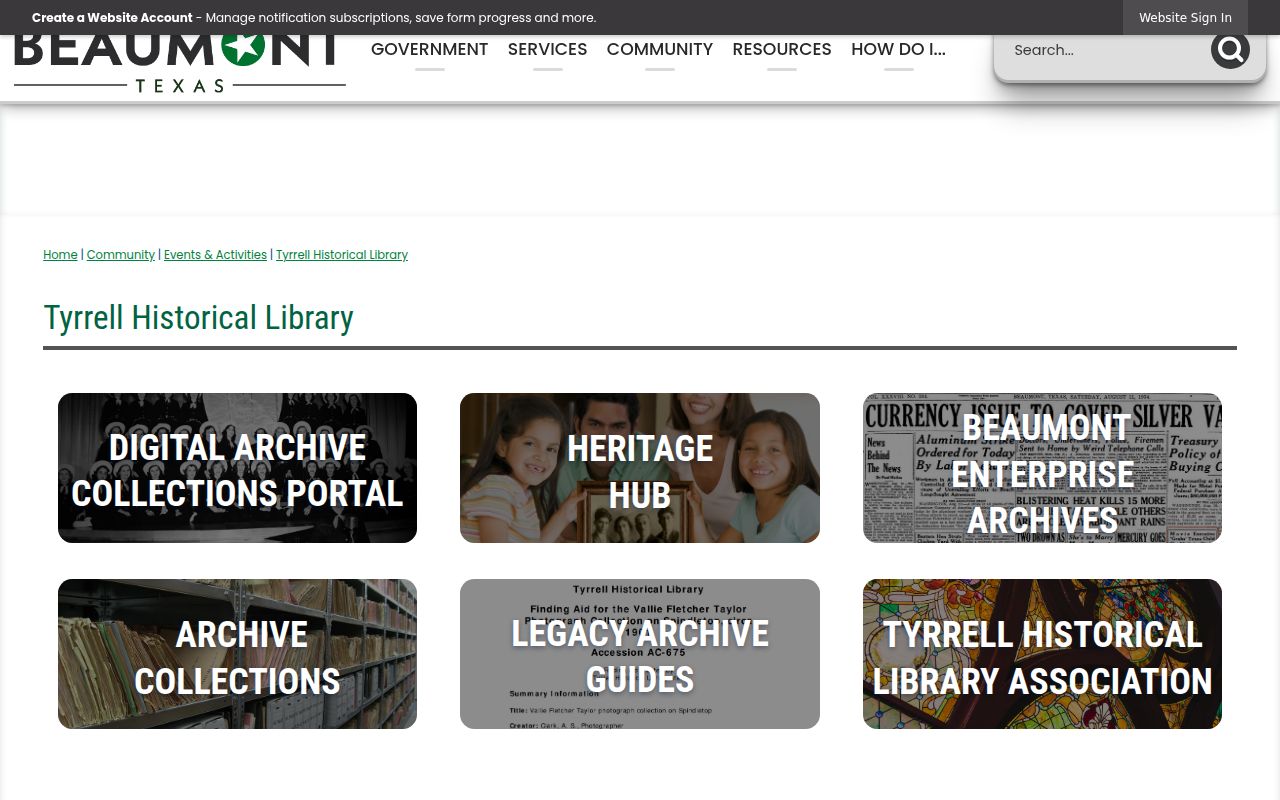
The library's census, newspaper, and directory resources give a printed entry a local context that a catalog record alone cannot supply.
Note: A library's holdings and database access can change, so verify the desired year and access route before making a trip.
Jefferson City Directory Catalogs Are Not Scans
The Jefferson County Historical Society CONTENTdm catalog reaches from the 1800s to the present and reports more than 27,000 catalog records, representing about 90 percent of its holdings. That is a strong finding aid for manuscripts, maps, letters, ledgers, and published documents. It is not the same as a fully digitized archive. The catalog warns that tags, dates, people, locations, and related-publication fields may be incomplete, and few originals are digitized.
Use a catalog identifier to plan an appointment or ask about a distant digitization request through the society. The research file says fees depend on quantity, difficulty, and end use. A catalog hit can add family papers or a map to a directory trail, but it should be cited as a catalog lead until the underlying item has been examined.
The Historical Society holdings page is the source for this catalog-only warning and its Jefferson collection scope.
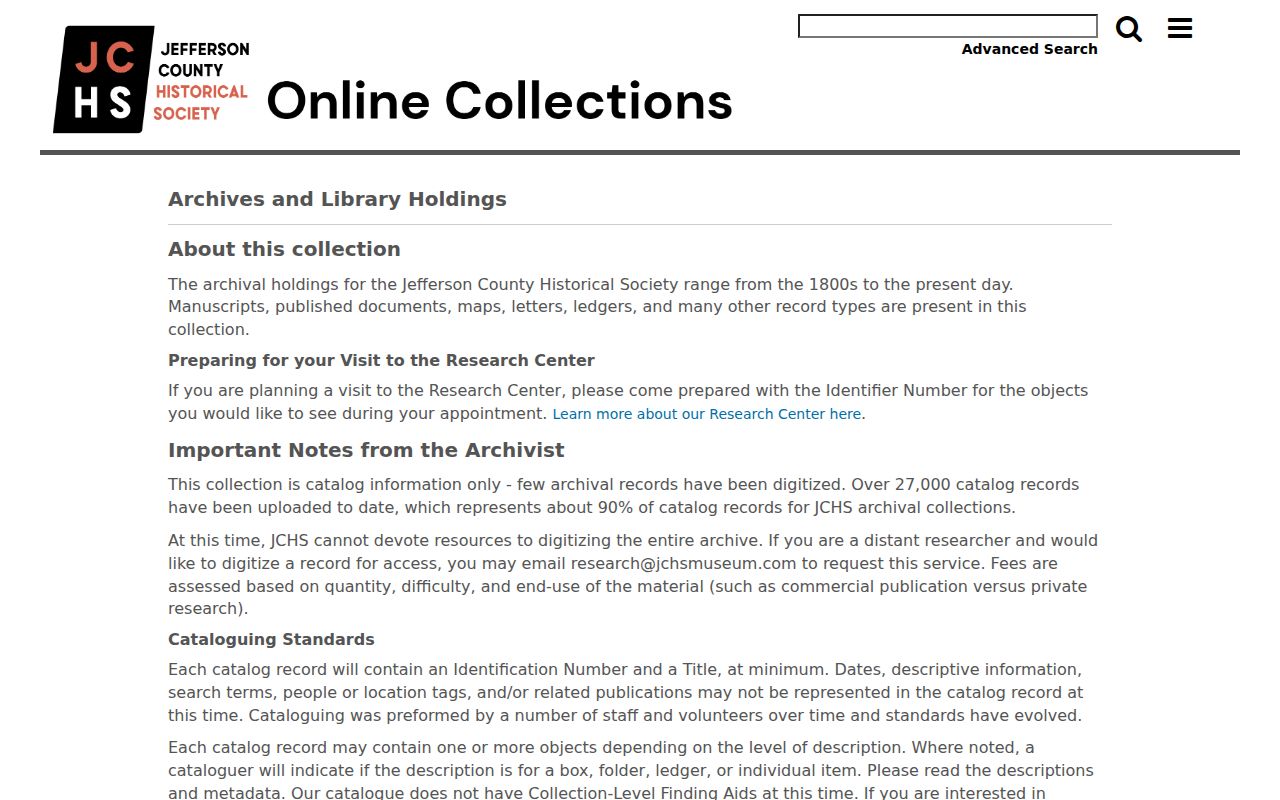
The screen is useful for locating a collection, while the repository remains the place to confirm the original material.
Jefferson City Directory Maps and Addresses
Old addresses deserve a second source. The Library of Congress holds a public-domain 1911 Beaumont Sanborn set with 107 sheets. It can show building footprints, materials, uses, street names, and lot context, but it does not name residents. The 1902 Nelson & White landownership map and Beaumont-related state archive maps from about 1850 through 1993 can help bridge a changed street label or a parcel description.
For an address that no longer reads like its modern form, compare lot, block, subdivision, adjacent cross streets, and the legal description. Do not assume a directional phrase in an old directory matches current postal formatting. Modern parcel work belongs in the address-focused Jefferson street directory; here, maps serve as context for a historical directory line.
Trace Jefferson City Directory Households
A careful Jefferson city directory trail follows a household across time instead of relying on a single entry. Start at the nearest known year, write down the exact page citation, then move one volume at a time in the direction that answers the question. A disappearance may reflect a move, a death, a changed spelling, a non-listed household, or a gap in the run. The next record should test that possibility rather than fill it with an assumption.
- Choose the Tyrrell or cataloged volume nearest the known address or name.
- Copy the exact name, address, abbreviation, page, publisher, and year.
- Check an address or criss-cross section if the repository has one, then confirm the same name alphabetically.
- Compare nearby directory years and pair a directory near 1910 or 1920 with the matching census household.
- Use the Enterprise, obituary sources, deed material, or probate records to test a move, death, or transfer.
For a transfer question, the Jefferson County Clerk's official-records index can test who held the parcel. For a household question, the directory and census are usually the better pair. When an old directory find needs current official-record confirmation, the Jefferson resident lookup page explains the separate modern record routes.
Note: Cite the repository, volume, page or reel, and access date so another researcher can repeat the same historical check.